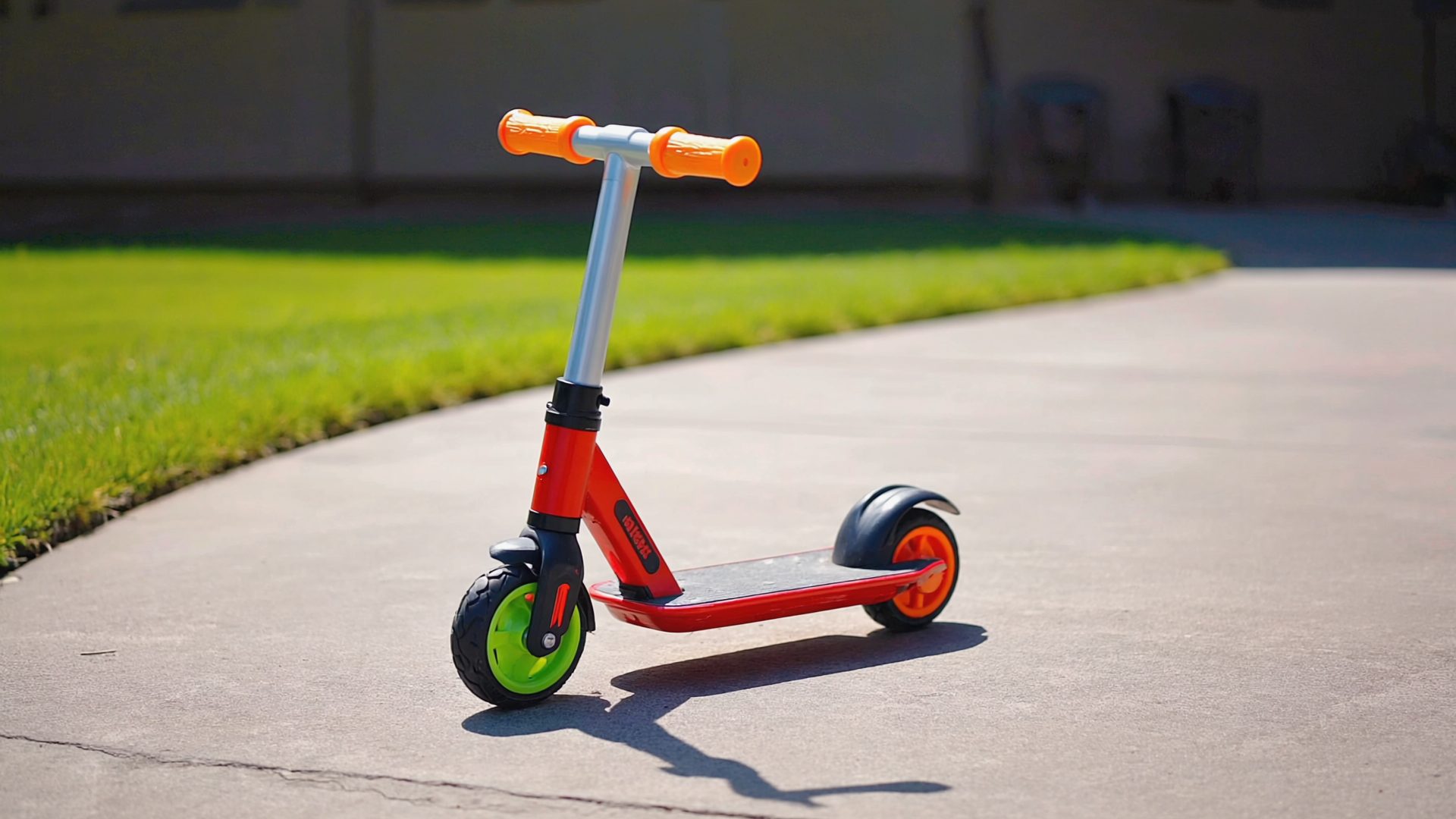
A scooter is one of those rare kids' products where spending more genuinely matters. The $15 scooter from the big box store will have wobbly wheels, a shaky handlebar, and a brake that stops working by month two. The better options on this list will last through multiple children and provide a riding experience smooth enough that your kid actually wants to ride every day.
We compared 10 scooters over three months with kids ages 2-12, riding them on sidewalks, driveways, playgrounds, and bike paths. We compared stability, ride smoothness, turning responsiveness, brake effectiveness, build quality, and how easily each scooter folded for transport. The differences between cheap and quality scooters were stark -- even the kids could feel it immediately when they switched between models.
Whether your toddler is taking first scooting steps or your 10-year-old wants to cruise the neighborhood, this list covers it. For complementary outdoor gear, check our kids' bikes guide and outdoor toys roundup.
What We Looked For
Every scooter was assessed on five criteria over at least six weeks of regular use:
- Stability & Safety (30%) -- How stable is the platform? How effective is the brake? Does the scooter inspire confidence or anxiety in the rider?
- Ride Quality (25%) -- Smooth rolling over sidewalk cracks and uneven pavement. Responsive turning without twitchiness. A comfortable deck height and width.
- Build Quality (20%) -- Materials, welds, bearing quality, and durability after weeks of daily riding. We checked for wobble, rattle, and wear.
- Adjustability & Growth (15%) -- How many years of use does the scooter provide? Adjustable handlebar height is essential for value.
- Portability (10%) -- Weight, fold mechanism, and how easily it fits in a car trunk or hangs on a hook.
The 10 Best Kids Scooters in 2026
1. Micro Mini Deluxe -- Best for Toddlers (Ages 2-5)
Price: $89.99 | Ages: 2-5 | Type: 3-wheel lean-to-steer | Weight limit: 75 lbs | Weight: 4.2 lbs
The Micro Mini Deluxe has been the benchmark toddler scooter for years, and the 2026 model hasn't changed the formula because it didn't need to. Two wheels up front, one in the back, and a lean-to-steer mechanism that turns the scooter by shifting body weight rather than turning the handlebar. This design is genius for small children because it mirrors natural balance instincts rather than forcing them to learn a new steering skill.
Our 2-year-old tester was scooting confidently within 15 minutes. The low deck sits close to the ground, so falls happen from minimal height. The silicone-covered handlebars are grippy even with sweaty toddler hands, and the rear brake is a simple step-on fender that kids figure out intuitively. The anodized aluminum T-bar adjusts from 17 to 25 inches, covering the full range from age 2 through 5.
At $90, the Micro Mini costs roughly three times what a basic toddler scooter costs. The difference is immediately obvious in the ride quality -- polyurethane wheels roll smoothly over sidewalk cracks that would jolt cheaper scooters, and the lean-to-steer linkage has zero play or wobble. We've talked to families who've passed the same Micro Mini through three children.
Pros
- Lean-to-steer teaches balance naturally
- Low deck for safe falls
- Smooth polyurethane wheels handle cracks and bumps
- Adjustable handlebar height -- 3 years of growth
- Extremely lightweight -- 4.2 lbs
- Durable enough for multiple children
Cons
- Premium price for a toddler product
- 75 lb weight limit is restrictive for larger kids
- LED wheel version costs $20 more
- Cannot fold for transport
Best for: First-time scooter riders ages 2-5 who need a stable, confidence-building ride.
2. Micro Maxi Deluxe -- Best for Ages 5-12
Price: $119.99 | Ages: 5-12 | Type: 3-wheel lean-to-steer | Weight limit: 110 lbs | Weight: 5.5 lbs
The Micro Maxi is the big sibling of the Mini Deluxe, designed for kids who've outgrown the toddler model but aren't ready for (or interested in) a two-wheel scooter. It uses the same lean-to-steer mechanism with larger wheels, a wider deck, a higher weight limit, and an adjustable T-bar that extends from 24 to 34 inches. Many kids ride this from kindergarten through sixth grade.
The ride quality is noticeably smoother than any two-wheel scooter at this price point. The two large front wheels absorb sidewalk imperfections that would rattle a Razor, and the lean-to-steer turning is more intuitive for casual riding than handlebar steering. The reinforced fiberglass deck flexes slightly under weight, providing a natural shock absorption that reduces leg fatigue on longer rides.
The 110 lb weight limit is the main constraint. Larger kids approaching that limit will feel the scooter start to bottom out over bumps. At that point, it's time to transition to a two-wheel model like the Razor A5 Lux with its 220 lb capacity.
Pros
- Smooth, stable ride on three wheels
- Lean-to-steer is intuitive and fun
- Adjustable from age 5 through 12
- Fiberglass deck provides flex and shock absorption
- Lightweight at 5.5 lbs
Cons
- 110 lb weight limit -- not for large tweens
- Premium price at $120
- Doesn't fold -- awkward for car transport
- Lean-to-steer less precise than handlebar steering at speed
Best for: Elementary-age kids who want a smooth, stable ride without balancing on two wheels.
3. Razor A5 Lux -- Best Two-Wheel Kick Scooter
Price: $69.99 | Ages: 8+ | Type: 2-wheel kick | Weight limit: 220 lbs | Weight: 8.2 lbs
The Razor A5 Lux is the scooter that parents end up "borrowing" from their kids. The 8-inch urethane wheels are significantly larger than standard scooter wheels, and the difference in ride quality is dramatic. Sidewalk cracks, expansion joints, and rough pavement that would stop a small-wheeled scooter roll right under the A5. The ride is fast, smooth, and satisfying.
The aluminum frame folds flat with a quick-release mechanism, making this one of the most portable options for car trunks, closets, and school storage. The adjustable handlebar accommodates riders from about 4'2" to adult height, and the 220 lb weight limit means parents can genuinely ride it too. The rear fender brake provides controlled stopping without the abruptness of hand brakes.
Two-wheel scooters require more balance skill than three-wheel models, so this isn't ideal for kids under 7-8. But for kids who can balance on two wheels, the A5 provides a riding experience that feels closer to the adult scooters you see in cities. At $70, it's also the best value on this list per year of usable life.
Pros
- Large 8-inch wheels for smooth riding over rough surfaces
- 220 lb weight limit -- kids through adults
- Quick-fold mechanism for easy transport
- Adjustable handlebar height
- Excellent value at $70
- Fast and fun for older kids
Cons
- Heavier than three-wheel models at 8.2 lbs
- Requires balance -- not for beginners under 7
- No suspension -- large bumps still felt
- Deck is narrow for larger feet
Best for: Older kids and tweens who want a fast, smooth two-wheel ride at a great price.
4. Globber Primo Plus -- Best Budget 3-Wheel
Price: $49.99 | Ages: 3-6 | Type: 3-wheel lean-to-steer | Weight limit: 110 lbs | Weight: 5.7 lbs
Not everyone wants to spend $90 on a toddler scooter, and the Globber Primo Plus makes a compelling case that you don't have to. At half the price of the Micro Mini Deluxe, the Globber offers the same lean-to-steer design, adjustable handlebar, and rear brake. The ride quality is slightly less refined -- you'll notice more vibration over rough surfaces -- but for sidewalk and driveway riding, the difference is marginal.
The Globber's standout feature is the steering lock button. Click it and the front wheels lock into a straight-ahead position, turning the scooter into a training mode where it only goes forward. This is brilliant for kids just learning to stand and push who would otherwise veer off-course. Once they've got their balance, unlock the steering and let them lean into turns.
Build quality is good for the price, though not quite at Micro's level. The deck is slightly heavier and the wheel bearings aren't as smooth. After about 18 months of daily use, expect to see some wear on the brake fender and minor looseness in the handlebar adjustment. Still, at $50, replacing it when it wears out costs less than the Micro's initial price.
Pros
- Half the price of Micro Mini Deluxe
- Steering lock mode for beginners
- Lean-to-steer design at a budget price
- Adjustable handlebar height
- Bright LED light-up wheels
Cons
- Ride quality slightly rougher than Micro
- Heavier than Micro Mini at 5.7 lbs
- Brake fender wears faster
- Handlebar loosens over time
Best for: Budget-conscious families who want lean-to-steer quality without the premium price.
5. Razor A2 Kick Scooter -- Best Classic Kick Scooter
Price: $44.99 | Ages: 5+ | Type: 2-wheel kick | Weight limit: 143 lbs | Weight: 5.8 lbs
The Razor A2 is the scooter most of us remember from our own childhoods, updated with a wheelie bar and slightly better bearings. It's simple, lightweight, foldable, and under $45. The small urethane wheels are fast on smooth surfaces, and the low deck makes pushing efficient. There are no gimmicks, no lights, no batteries -- just a solid kick scooter that does exactly what it's supposed to do.
For park tricks and skatepark-adjacent riding, the A2 is actually better than the more expensive options. It's light enough for bunny hops, the wheelie bar encourages tricks, and the lower center of gravity makes it responsive to quick maneuvers. Kids who use their scooter more for active play than commuting will prefer this to the bigger-wheeled models.
The trade-off is ride comfort on rough surfaces. Small wheels transmit every crack and bump directly through the deck. Extended rides on uneven sidewalks get tiring fast. For neighborhood cruising and longer trips, the Razor A5 Lux with its larger wheels is the better choice. For park riding and trick attempts, the A2 wins.
Pros
- Excellent price for a quality scooter
- Lightweight at 5.8 lbs
- Folds flat for easy storage
- Wheelie bar for tricks
- Low deck for efficient pushing
Cons
- Small wheels rough on uneven pavement
- 143 lb weight limit excludes tweens and parents
- Handgrips wear out -- need replacing annually
- Rattles develop over time
Best for: Kids who want a lightweight, trick-friendly scooter at a great price.
6. LaScoota 2-in-1 Scooter -- Best Convertible
Price: $39.99 | Ages: 2-8 | Type: 3-wheel with removable seat | Weight limit: 110 lbs | Weight: 6.0 lbs
The LaScoota includes a removable seat that converts the scooter into a seated ride-on for younger toddlers who aren't ready to stand. Pop the seat on for ages 2-3, remove it when they graduate to standing around age 3-4, and you've got a standard three-wheel scooter that works through age 8. It's two products in one purchase.
The seat mode is surprisingly stable. The padded seat sits low over the rear wheel, and kids push themselves along with their feet -- essentially a seated scooter. Our 2-year-old tester took to it immediately, scooting around the driveway while building the leg strength and balance awareness that would make standing scooter riding easier later.
Once the seat comes off, the LaScoota functions as a competent lean-to-steer scooter with LED light-up wheels and an adjustable handlebar. It's not as refined as the Micro or Globber -- the steering feel is a bit vague and the brake requires more force -- but at $40 for both a ride-on and a scooter, the value is outstanding.
Pros
- Seat converts to ride-on for toddlers
- Two products in one at $40
- LED light-up wheels
- Adjustable handlebar height
- Wide age range coverage (2-8)
Cons
- Steering not as precise as Micro or Globber
- Brake requires more force than premium models
- Seat attachment point can loosen over time
- Heavier than single-purpose scooters
Best for: Families who want one product that covers the transition from seated riding to standing scooting.
7. Segway Ninebot Zing E8 -- Best Kids' Electric Scooter
Price: $179.99 | Ages: 6-12 | Type: Electric kick | Weight limit: 132 lbs | Top speed: 8.7 mph
The Segway Zing E8 is purpose-built for kids, which sets it apart from adult electric scooters that companies market to children by changing the color. The top speed is capped at 8.7 mph -- fast enough to thrill a kid, slow enough that falls don't result in serious injury. Three speed modes (Turbo, Cruise, and Safe) let parents limit the maximum speed as their child builds skill and confidence.
The kick-to-start feature is a smart safety detail. The motor doesn't engage until the rider is already moving from a kick push, preventing the dangerous lurch that happens with throttle-only electric scooters. The handbrake provides controlled stopping, and the rubberized deck grip keeps feet planted during rides.
Battery life is about 40 minutes of continuous riding (roughly 6 miles), which is enough for after-school neighborhood cruising. Charging takes about 3-4 hours. At 18 lbs, it's heavier than kick scooters, but kids aren't carrying it -- they're riding it. The solid build quality and Segway's reputation make this our top electric pick for kids under 12.
Pros
- Purpose-built for kids with appropriate speed limits
- Three speed modes for progressive skill building
- Kick-to-start prevents dangerous lurching
- Solid Segway build quality
- Handbrake for controlled stopping
Cons
- Heavy at 18 lbs -- not easy for kids to carry
- 40-minute battery life is limiting
- 3-4 hour charge time
- Expensive compared to kick scooters
Best for: Kids 8+ who want electric scooting with proper safety features and speed limits.
8. Razor E100 Electric -- Best Budget Electric
Price: $129.99 | Ages: 8+ | Type: Electric kick | Weight limit: 120 lbs | Top speed: 10 mph
The Razor E100 has been an entry-level electric scooter for years, and the current version remains competitive at its price point. A twist-grip throttle controls the chain-driven motor, which pushes the scooter to 10 mph on the 8-inch air-filled front tire. The pneumatic tire handles bumps and cracks significantly better than the solid tires found on many electric scooters in this range.
Continuous ride time runs about 40 minutes on a full charge, comparable to the Segway Zing E8. The lead-acid battery adds weight (it brings the total to 29 lbs), but it also costs less to produce, which is how Razor keeps the price $50 below the Segway. The trade-off is that lead-acid batteries lose capacity faster over time -- expect reduced range after about 12-18 months of regular use.
One significant difference from the Segway: the E100 uses a hand throttle rather than kick-to-start. This means the motor can engage from a standstill, which requires more rider maturity. Razor rates it for ages 8+, and we'd agree -- younger kids may lack the throttle control needed for safe riding.
Pros
- Affordable entry into electric scooters
- Pneumatic front tire smooths the ride
- 10 mph top speed -- fun but manageable
- Razor brand reliability and parts availability
- 40-minute ride time
Cons
- Heavy at 29 lbs -- hard for kids to carry
- Lead-acid battery loses capacity over time
- No speed limiter modes like Segway
- Hand throttle from standstill requires maturity
Best for: Families wanting an electric scooter experience without the premium price tag.
9. HUDORA BigWheel 205 -- Best for Commuting
Price: $79.99 | Ages: 6-adult | Type: 2-wheel kick | Weight limit: 220 lbs | Weight: 9.2 lbs
The HUDORA BigWheel 205 is a German-engineered kick scooter designed for practical transportation, not just play. The 205mm (8-inch) wheels and low-friction ABEC-7 bearings produce a gliding ride that covers distance efficiently. Kids who ride their scooter to school, to a friend's house, or around the neighborhood will appreciate how much ground this covers per kick compared to small-wheeled scooters.
The shoulder strap and quick-fold mechanism make this genuinely practical for school commutes. Fold it in two seconds, throw the strap over your shoulder, walk into the building. No locking it up outside, no carrying a bulky folded scooter under your arm. The 220 lb weight limit means it works through teenage years and beyond.
Build quality is exceptional. HUDORA has been making scooters in Germany for over 100 years, and the welding, bearing quality, and finish on this model reflect that heritage. Nothing rattles, nothing loosens, and the fold mechanism stays tight after hundreds of uses.
Pros
- Large 205mm wheels for smooth, efficient cruising
- ABEC-7 bearings -- premium roll quality
- Quick-fold with shoulder strap for transport
- 220 lb limit -- ages 6 through adult
- German engineering and build quality
Cons
- Heavier than play-focused scooters at 9.2 lbs
- Not ideal for tricks -- built for commuting
- Tall deck height may be uncomfortable for shorter kids
- Higher price than Razor alternatives
Best for: Kids who ride their scooter for transportation, not just play -- school commutes, neighborhood trips, errands.
10. Yvolution Y Fliker -- Best for Active Play
Price: $59.99 | Ages: 5-9 | Type: 3-wheel self-propelling | Weight limit: 88 lbs | Weight: 7.5 lbs
The Y Fliker works differently from every other scooter on this list. Instead of kicking off the ground, the rider stands with feet on two separate rear platforms and moves them in a wiggling motion to propel forward. It's self-propelling -- no foot ever touches the ground once you're moving. Kids find this hilarious and addictive. Parents find it useful because it develops core strength, balance, and coordination more actively than a standard kick scooter.
The learning curve is steeper than a regular scooter. Most kids take 15-30 minutes to figure out the wiggle motion and sustain forward movement. Once they get it, the Y Fliker becomes a workout disguised as play. The three-wheel design keeps things stable while learning.
The 88 lb weight limit and the relatively small platform size mean this is best for the 5-9 age range. Older or larger kids will feel cramped. But within its target range, the Y Fliker provides a unique riding experience that gets kids genuinely exercising without feeling like exercise.
Pros
- Self-propelling -- great exercise disguised as fun
- Develops core strength and coordination
- Unique riding experience kids love
- Three-wheel stability
- No foot-to-ground contact once moving
Cons
- Steeper learning curve than kick scooters
- 88 lb weight limit restricts age range
- Slower top speed than kick scooters
- Not practical for commuting or distance
Best for: Active kids who want something different from a standard scooter that also doubles as exercise.
Comparison Table
| Scooter | Price | Ages | Type | Weight Limit | Foldable | Best For |
|---|---|---|---|---|---|---|
| Micro Mini Deluxe | $89.99 | 2-5 | 3-wheel | 75 lbs | No | Toddlers |
| Micro Maxi Deluxe | $119.99 | 5-12 | 3-wheel | 110 lbs | No | Elementary kids |
| Razor A5 Lux | $69.99 | 8+ | 2-wheel | 220 lbs | Yes | Best 2-wheel value |
| Globber Primo | $49.99 | 3-6 | 3-wheel | 110 lbs | No | Budget 3-wheel |
| Razor A2 | $44.99 | 5+ | 2-wheel | 143 lbs | Yes | Tricks/park |
| LaScoota 2-in-1 | $39.99 | 2-8 | 3-wheel + seat | 110 lbs | No | Convertible |
| Segway Zing E8 | $179.99 | 6-12 | Electric | 132 lbs | Yes | Best electric |
| Razor E100 | $129.99 | 8+ | Electric | 120 lbs | No | Budget electric |
| HUDORA BigWheel | $79.99 | 6-adult | 2-wheel | 220 lbs | Yes | Commuting |
| Y Fliker | $59.99 | 5-9 | Self-propelling | 88 lbs | No | Active play |
Scooter Buying Guide
Three Wheels vs. Two Wheels
Three-wheel scooters with lean-to-steer are designed for kids roughly ages 2-8. They teach balance progressively and rarely cause falls because the wide stance keeps the scooter upright. Two-wheel scooters require more balance and coordination, making them better for ages 5 and up. Most kids naturally want to switch to two wheels around age 6-8 when their friends start riding them.
Wheel Size and Ride Quality
Larger wheels roll over bumps more easily and maintain speed longer per kick. The Razor A5 Lux (8-inch wheels) and HUDORA BigWheel 205 (8-inch wheels) ride dramatically smoother than the Razor A2 (small wheels). For neighborhood cruising and commuting, bigger wheels are worth the extra cost. For park tricks and agility, smaller wheels provide better responsiveness. A great pair with a scooter is one of the best kids' headphones for music on the ride -- just make sure they can still hear traffic.
Electric vs. Kick
Electric scooters are thrilling for kids, but kick scooters provide better exercise and develop more physical skills. We recommend kick scooters as a child's primary scooter and electric as a fun addition for kids who've already mastered kick riding. Always require helmets on electric scooters -- the speeds are higher and falls are harder.
FAQ
What age can kids start riding a scooter?
Most children can start on a three-wheel scooter around age 2-3. The lean-to-steer design on models like the Micro Mini Deluxe requires less coordination than a two-wheel scooter, and the wide base provides stability. Two-wheel kick scooters work well starting around age 5-6 when balance and coordination are more developed. Electric scooters should wait until age 8 at minimum.
Are 3-wheel or 2-wheel scooters better for kids?
Three-wheel scooters are better for kids under 5 because the two front wheels provide stability and the lean-to-steer mechanism is intuitive. Two-wheel scooters are better for kids 5 and up because they're lighter, more maneuverable, and develop better balance skills. Most kids naturally transition from three to two wheels around ages 5-7.
Should kids wear helmets on scooters?
Yes, always. The American Academy of Pediatrics recommends helmets for all scooter riding. Head injuries are the most common serious scooter injury in children. Use a CPSC-certified bike helmet that fits properly -- it should sit level on the head, cover the forehead, and have straps that form a V under each ear. Make helmets non-negotiable from the first ride so it becomes habit.
🛴 Our Top Scooter Picks
- Micro Mini Deluxe — best for toddlers and preschoolers
- Micro Maxi Deluxe — best for elementary through middle school
- Razor A5 Lux — best two-wheel value for older kids
Final Verdict
The right scooter depends entirely on your child's age and how they'll use it:
- Micro Mini Deluxe ($89.99) for toddlers ages 2-5 -- the lean-to-steer gold standard
- Micro Maxi Deluxe ($119.99) for elementary kids ages 5-12 -- smooth three-wheel riding that grows with them
- Razor A5 Lux ($69.99) for older kids and tweens -- the best two-wheel ride at any price near this range
- Segway Zing E8 ($179.99) for electric -- purpose-built safety features that adult-scooter-for-kids models lack
Start with a three-wheel model for younger kids. The confidence they build on a stable platform transfers directly when they eventually want a two-wheel scooter, and the riding skills they develop are the same ones that make biking easier too.